
Ice Packs vs PCM Gel Packs: Which Holds Temperature Longer?
Compare plain ice and PCM gel packs on temperature stability, hold time, reuse and cost. Find out when each one makes sense for a shipment.
A buyer with a failing ice pack has two choices. Add more ice, or change the coolant. Before you decide, understand what each one actually does.
We also know when a plain ice pack is good enough. This comparison is honest in both directions.
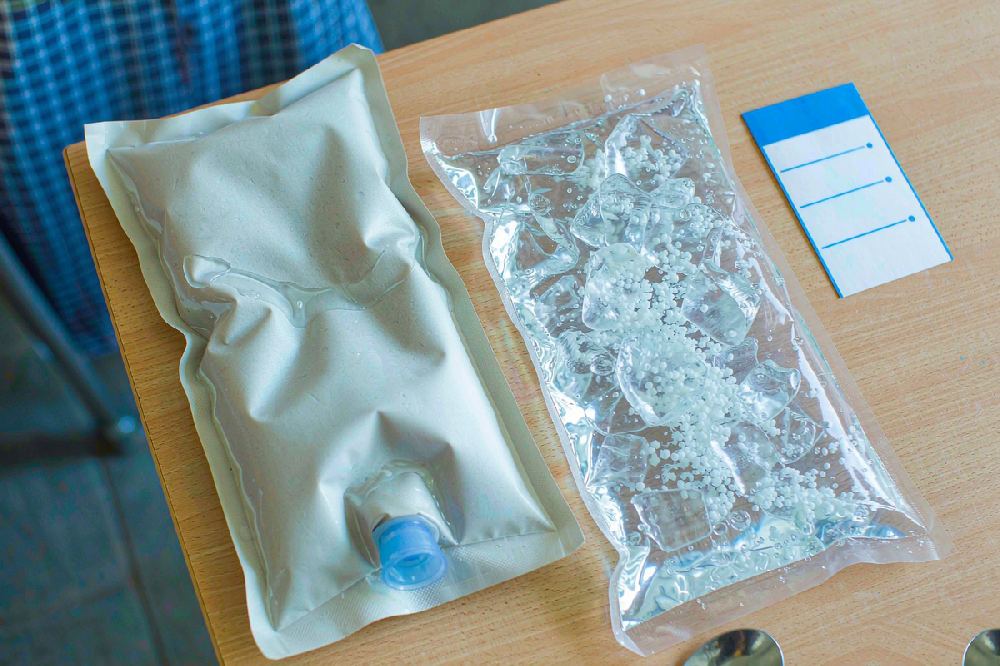
The question in one line
Ice packs vs pcm gel packs differ in one main way. Plain ice has one fixed melt point. A PCM can be made for many bands.
That single fact drives most of the differences below. It affects stability, hold time, and the goods you can carry.
Keep it in mind as you read. The rest is detail built on that base.
What plain ice does well
Water ice is cheap. It is easy to find and easy to freeze. Almost any freezer can charge it.
It also carries a lot of stored cold per kilogram. For a rough, low-cost job, ice works. Many shipments arrive fine on ice.
If your goods tolerate a wide band and the route is short, ice may be all you need. There is no shame in that choice.
Where plain ice struggles
Ice melts at a single fixed point. Before it melts, it can be far colder than that point. After it melts, it warms quickly.
Your goods see that swing. Fresh produce can freeze near the pack. Then it can warm as the ice turns to water.
This is the phase change vs regular ice difference in practice. Ice changes phase, but at a point you cannot tune.
What a PCM gel pack does differently
A phase change material gel pack is tuned to a band. You select it by the temperature your goods need. It then holds near that band while it melts.
The held band is what you buy. Not the coldest temperature, but the steadiest one. For sensitive goods, steady beats extreme.
A phase change material cold pack in the right band protects without overcooling. It also avoids the fast warm-up after a full melt.
Is a pcm gel pack colder than ice
This is a common question. The honest answer is: not always. A PCM can be colder, warmer, or near the same point as ice.
It depends on the band you choose. A subzero PCM is colder. A chilled band PCM may sit above the ice point.
So do not buy PCM to get "colder." Buy it to get a band that matches your product. That distinction saves money and goods.
| Question | Plain ice | PCM gel pack |
|---|---|---|
| Melt point | One fixed point | Selectable band |
| Temperature swing | Larger | Smaller near the band |
| Freezer need | Any home freezer | Must reach the freeze point |
| Cost per pack | Low | Higher |
| Reuse | Yes | Yes, with care |
How long does a gel pack last
There is no universal number. Hold time is a system result, not a property of one pack. Four things set it.
The band gap matters. A very cold pack in a hot box spends fast. Pack mass matters too. More material holds more cold.
Insulation is the third factor. Better walls slow the heat leak. Handling is the fourth. Each lid open shortens the hold.
To answer "how long does a gel pack last" for your case, run a logged test. Use your real route and your real box.
Best coolant for shipping frozen food
Frozen food has a clear limit. It must stay below its thaw point through the trip. A melt that finishes early is a real loss.
For frozen food, the best coolant for shipping frozen food is usually a subzero pack with enough mass. It should finish the trip with cold left.
Ice can work here. But a tuned subzero band gives more margin. That margin matters on hot routes or long waits.
Temperature stability in practice
Think about what your goods experience. With ice, the pack may start too cold and end warm. The product sees both ends.
With a matched PCM, the product sits near one band. There are fewer peaks and dips. That is the pcm vs ice temperature stability advantage.
Stability matters most for high-value or sensitive loads. For rugged goods, it may not be worth the extra cost.
The honest case for ice
We will not tell you PCM replaces ice everywhere. It does not. Ice remains the right answer in many cases.
Use ice when the route is short and the load is sturdy. Use it when cost per shipment is the main driver. Use it when you can replace packs freely.
A supplier who pushes PCM for every load is not helping you. Match the tool to the job.
The case for PCM
Choose PCM when your goods have a narrow band. Choose it when overcooling causes damage. Choose it when the trip is long or the route is hot.
Choose it when a claim or a spec requires a held range. In those cases, the tuned band is worth more than the pack price.
| Situation | Better choice | Reason |
|---|---|---|
| Short local drop | Plain ice | Low cost is enough |
| Narrow chilled band | PCM gel pack | Band control |
| Frozen, long route | Subzero PCM | More margin |
| Rugged goods | Plain ice | Stability less critical |
| Compliance-driven load | PCM gel pack | Held, logged range |
Reuse and cost over time
Both pack types can be reused. Reuse changes the cost picture. A single-use view can mislead you.
Track the number of trips each pack completes. Divide the pack cost by that number. Then compare with ice on a cost-per-trip basis.
Also count the labour. A pack that charges fast and cleans easy saves time. Time is part of the real cost.
Make the switch safely
If you want to try PCM, do not switch the whole fleet. Run one route. Keep your current method as a control.
Put a logger in both boxes. Compare the traces side by side. Look at the band, not at the lowest temperature.
If the PCM trace holds tighter, you have your answer. If not, check the band choice and the charge step first.
Read the temperature trace
A logger is the fairest judge in this debate. It does not care which pack you prefer. It shows what the goods felt.
With ice, expect a lower start and a faster climb near the end. The curve can look like a slope. With PCM, expect a flatter middle near the band.
That flat middle is the phase change at work. The material is spending heat on changing state. Your goods ride on that flat line.
| Trace feature | What it usually means | What to do |
|---|---|---|
| Flat near band | PCM holding phase | Good, keep setup |
| Fast rise at end | Pack is spent | Add mass |
| Early high peak | Lid open or hot load | Check handling |
| Deep dip below band | Pack too cold | Change band |
Use this table when you review a test. It turns a chart into an action.
Charge time is part of the job
Both ice and PCM need time to charge. A rushed charge weakens either pack. Plan for it in your schedule.
Ice freezes at a point most freezers reach fast. A PCM must reach its own freezing point. Check that your cold room can get there.
If it cannot, the PCM never fully sets. Then it behaves like a weak pack. Your trace will show a short flat section.
A note on food contact
Whatever pack you use, check contact rules. A pack near food should have a clear safety sheet. Ask your supplier for it.
Also check that the pack shell is intact. A leak ends the pack's useful life. It can also spoil the load.
These checks take a minute. They belong in every dispatch routine.
FAQ
Is a PCM gel pack colder than ice?
Not always. It depends on the band you choose. Some PCMs are colder, some warmer, and some sit near ice.
Why does plain ice warm up faster?
Once ice has fully melted, its temperature rises with incoming heat. A PCM holds near its band while it changes phase.
Can I mix ice and PCM packs?
Yes, but test the result. Mixed packs can pull the box toward the colder band and overcool sensitive goods.
Are PCM packs reusable?
Most are. Let them reset, check the seal, and charge them fully again before the next trip.
Which is cheaper over many shipments?
It depends on trip count and replacement rate. Compare cost per successful trip, not the price of one pack.
Do PCM packs leak?
A sound pack should not. Check the shell every time. Retire any pack that shows a leak or a damaged seal.
When is plain ice good enough?
For short routes, sturdy goods, and wide temperature bands, ice is often the sensible low-cost choice.
What band do I need for frozen food?
A subzero band with enough margin to finish the trip. Confirm the exact band against your product rules.
How do I test a switch?
Run one logged route with PCM and one with your current method. Compare the temperature traces.
Where can I see PCM options?
Ask us for the phase change data sheet, or view materials on the product collection page.