
LM-425D-YS: A Data-Centre Coolant Specified for the Secondary Loop
LM-425D-YS is a pre-diluted data centre coolant for cold-plate secondary loops: 25% inhibited ethylene glycol, ready to pour, low starting conductivity. The spec, line by line.
Liquid cooling moved from option to default faster than the coolant aisle kept up. In a cold-plate hall, the fluid that circulates between cold plates and cooling units is no longer a commodity topping. It touches copper plates, aluminium distributors, stainless piping and a row of seals, and it sits close to live boards. Choosing it deserves the same care as choosing a pump. This piece reads one specific data center coolant, line by line: LM-425D-YS from Glacier Coolant.
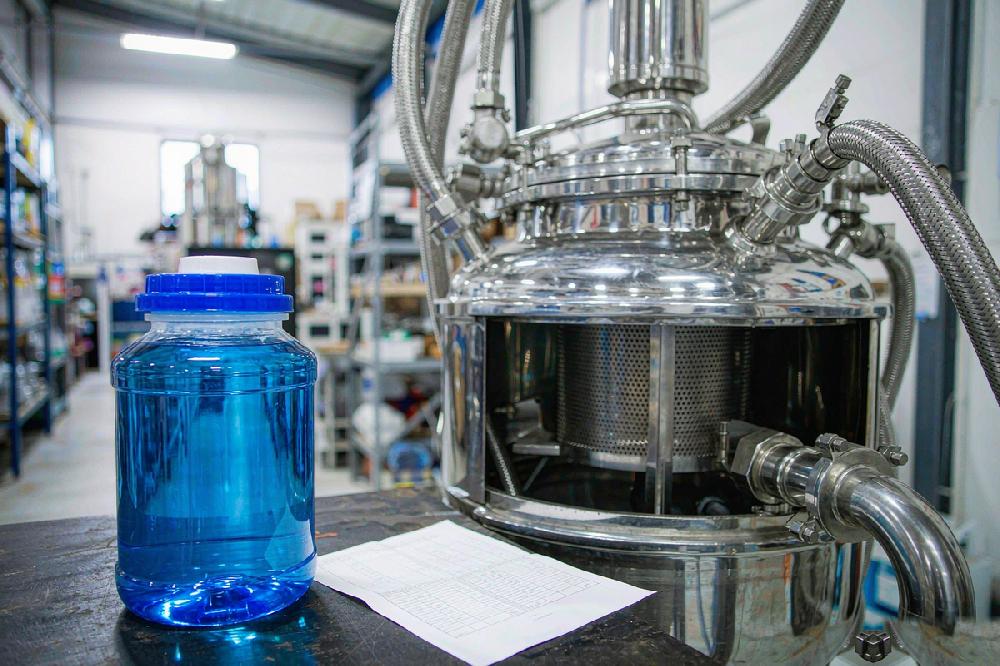
What LM-425D-YS is
LM-425D-YS is a pre-diluted, inhibited ethylene glycol coolant built for the secondary side of cold-plate liquid cooling. The glycol content is 25%, measured and adjusted at the factory. You open the drum and fill. There is no on-site mixing step, no refractometer corrections on the loading dock, and no risk that two technicians prepare two different concentrations from the same concentrate.
That last point sounds small until you audit what mixing errors cost. A plant we advised once found three concentrations in the same loop, from three shift practices. None was wrong on paper. Together they were a fluid the specification had never met. A loop filled too lean loses freeze and corrosion margin. A loop filled too rich loses heat transfer performance and pumps viscosity through the plates for nothing. Pre-dilution removes that whole class of error, which is why data-centre operators increasingly specify ready-to-use fluid for glycol liquid cooling duty.
The lines that matter on the spec
| Spec line | What it says | Why it is there |
|---|---|---|
| Base | 25% inhibited ethylene glycol in deionized water | Freeze protection with stable inhibitor chemistry |
| Form | Pre-diluted, ready to pour | Removes mixing error and water-quality risk |
| Starting conductivity | 669.3 μS/cm | Limits leakage consequence and galvanic current in the loop |
| Corrosion package | Multi-metal film-forming inhibitors | Protects copper, aluminium, steel and soldered joints |
| Compatibility | Cold plates, distribution manifolds, CDU wetted parts | One fluid for the whole secondary path |
| Monitoring band | Conductivity, pH, inhibitor residual | Defines "in spec" for the operating years |
Two lines deserve unpacking, because they carry most of the engineering.
Starting conductivity: what 669.3 μS/cm buys you
The secondary loop runs metres from live electronics. If a joint weeps and fluid reaches a board, the damage scales with how well that fluid conducts. A lower starting conductivity shrinks the consequence of a leak and reduces the galvanic current that can flow between dissimilar metals in the loop. That is why LM-425D-YS opens with a number rather than an adjective.
But the number is a starting point, not a promise. Coolant is an ion-bearing solution by design. Inhibitors, pH buffers and biocides all carry ions, and the film-forming ones need enough ionic presence to do their job. Strip the fluid toward zero and the protective film goes first — a condition worse than the conductivity you saved. The intelligent target is a controlled band, not a floor chase. We treat this trade-off fully in the companion piece on the low-conductivity trade-off, and the operating-side view lives in the conductivity red line.
| Approach | What it optimizes | What it risks |
|---|---|---|
| Chase lowest possible conductivity | Leak consequence | Inhibitor cannot film; bare metal; pitting |
| Ignore conductivity | Nothing | High leakage damage; strong galvanic currents |
| Controlled band with active inhibition | Both sides of the trade | Requires monitoring discipline |
LM-425D-YS is built for the third row: an engineered starting point, then a monitored band.
Who the fluid touches: the metal and seal list
A secondary loop is a materials sandwich. Copper cold plates. Aluminium splitters and headers. Stainless or polymer tubing. Brass fittings. EPDM and FKM seals at every joint. A data center coolant must be inert toward all of them at once, because galvanic pairs form the moment two metals share an electrolyte.
The inhibitor package in LM-425D-YS is film-forming and multi-metal, developed through the M3 super-film rust inhibition technology and the Modify2000 compounding technology. In plain terms: the chemistry is tuned to deposit and maintain a protective layer on each metal family in the loop, not just the dominant one. Seals are addressed by formulation as well — the fluid is engineered not to swell or harden the common elastomers used in liquid cooling hardware.
For the primary side, where the loop runs outdoors through dry coolers, Glacier Coolant specifies a different product, covered in the primary-side coolant piece. One fluid for both sides is possible; matching each side's duty is better engineering.
Reading the name
Model codes look cryptic until someone explains them. Here is the pattern behind LM-425D-YS:
| Code element | Meaning |
|---|---|
| LM | The Glacier Coolant coolant series |
| 4 | Product family within the series |
| 25 | Family number in the LM-4 line |
| D | Low-conductivity formulation |
| Y | Organic-base chemistry |
| -YS | Factory build code — confirm the exact definition against the current datasheet |
The honest note is on the last row. The D and Y suffixes are stable, documented descriptors of formulation intent. The trailing YS is a build designation; we do not invent a public meaning for it. Ask for the datasheet when precision matters, which it should. Codes carry intent. They do not carry guarantees. Documents do. So the datasheet, not the drum label, is the contract between your loop and our chemistry.
How it is made, and who stands behind it
Glacier Coolant is the coolant brand of Chaoyang Guangda Chemical Co., Ltd. The company has formulated secondary refrigerants and industrial cooling fluids since 1994, holds more than 30 invention patents, applies the Box7 full-scope test method to every candidate fluid, and serves over 4,000 customers. Box7 is the name for that test set: metals, temperatures and flow are checked together, so the fluid is judged as a system rather than one property at a time. For a data-centre buyer, those facts translate into three deliverables: batch traceability on every drum, documented corrosion data behind the inhibitor claims, and a service team that reads your loop's numbers with you over the years.
What to send, and what comes back
Matching a coolant to a loop needs four inputs: cold plate and wetted-metal list, seal and elastomer list, design flow temperature band, and the machine-side limits your hardware vendor imposes. Two habits make the exchange useful. Send the lists as built, not as drawn, because fleets drift. And include the failures you have already had, because a fluid that must coexist with history deserves to know it. Send those, and the return is the full LM-425D-YS specification with corrosion data, the monitoring plan with warning lines, and the batch documents for the drums you would actually receive.
What the decade costs, line by line
A secondary-loop coolant lives on the balance sheet in more places than the purchase line. Reading LM-425D-YS against a ten-year horizon makes the comparison with commodity glycol concrete, because each row has a different owner and a different failure mode.
| Cost line | Commodity glycol pattern | Engineered, pre-diluted pattern |
|---|---|---|
| Fill and make-up | On-site mixing; concentration drifts with practice | Factory fixed; make-up is the same drum |
| Corrosion consequences | Films vary by batch and by metal; deposits accumulate | Documented film on the loop's metals; trended residuals |
| Leak consequence | Conductivity whatever the mix produced | Defined starting band; monitored drift |
| Diagnosis support | Drifting fluid writes noise into operating data | Stable baseline; signatures stay readable |
| Audit and handover | Verbal assurances | Batch records and corrosion documents on file |
The last row is the one auditors and insurers care about. A hall that can produce the fluid file — what was poured, when, with what corrosion data — closes questions in minutes. A hall that cannot re-litigates its own history at the worst possible time.
None of these lines require the engineered fluid to be dramatically cheaper per litre. It rarely is. The argument is structural. The commodity pattern books costs in operations, in diagnostics and in audit exposure, and those books are kept by different departments who rarely compare notes. The pre-diluted, documented pattern books them on one page, at delivery, where they can be argued about before the money is spent.
FAQ
What coolant is used in data center liquid cooling?
Cold-plate secondary loops commonly run water with inhibited glycol, engineered for low conductivity and multi-metal compatibility. LM-425D-YS is one such coolant: 25% inhibited ethylene glycol, pre-diluted and ready to pour. Immersion tanks use different, purpose-designed fluids.
Why is LM-425D-YS pre-diluted?
Factory pre-dilution at 25% glycol removes on-site mixing error and water-quality variation. The loop gets one consistent chemistry from drum one to drum fifty, which is what a specification wants.
What conductivity should data center coolant have?
Low enough to limit leak damage, high enough — with the right chemistry — for inhibitor films to form and hold. A controlled band with monitoring beats chasing the lowest single reading. The starting point of LM-425D-YS is 669.3 μS/cm.
Is inhibited ethylene glycol safe near servers?
With a leak, any water-based fluid risks the board it reaches. Low starting conductivity and clean chemistry shrink that risk; leak detection and drip management manage it. No water-based coolant makes leak consequence irrelevant.
Can I mix LM-425D-YS with another coolant?
Do not plan to. Mixing inhibitor packages can drop films and destabilize the chemistry. If a loop must be converted, flush and refill under a written plan.
What does the D in LM-425D-YS mean?
D marks the low-conductivity formulation within the family. Y marks the organic-base chemistry. The trailing YS is a factory build code — confirm it against the current datasheet.
Does the fluid work with aluminium cold plates?
Yes. The package is film-forming across copper, aluminium, steel and soldered joints, which is the realistic metal list of a secondary loop. Send your exact metal list for written confirmation.
How is the fluid monitored in service?
Conductivity, pH and inhibitor residual on a schedule, with defined warning lines. Glacier Coolant supports the readings with a monitoring plan supplied alongside the first delivery.
Who manufactures LM-425D-YS?
Chaoyang Guangda Chemical Co., Ltd., the company behind the Glacier Coolant brand, producing secondary refrigerants since 1994 with 30+ invention patents and 4,000+ customers served.
Put the datasheet next to your loop
The fastest next step costs you one email. Send the wetted-metal list, the seal list, and your temperature band. We will return the full LM-425D-YS specification and the monitoring plan, and mark plainly anything that needs checking against your hardware. See the product collection for the range, or compare this fluid's chemistry logic with the low-conductivity trade-off before you write the spec.