
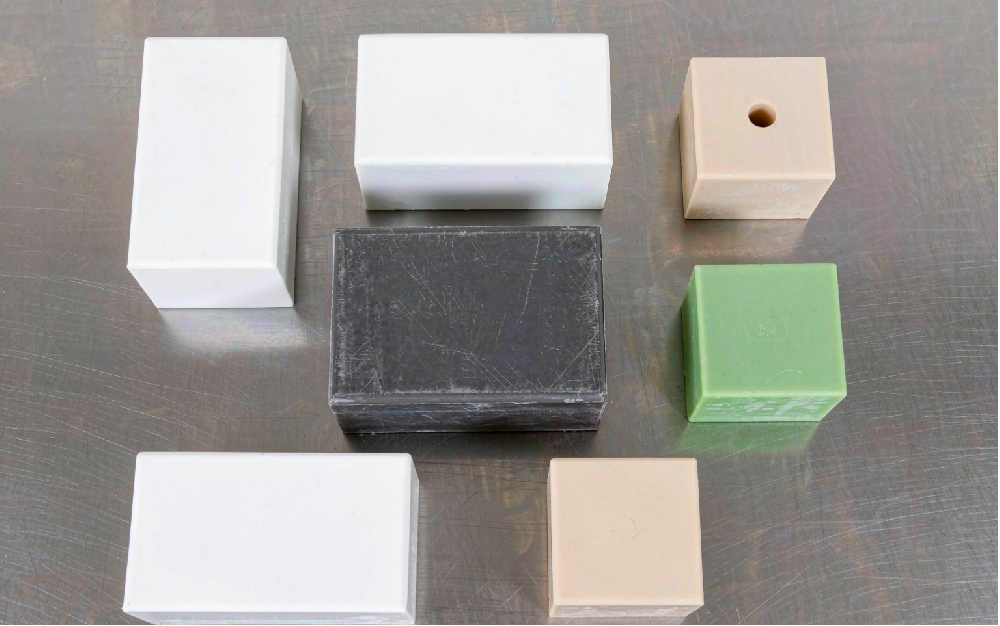
Glacier Coolant, a global supplier of cooling media and thermal energy storage materials, announced today that it has completed a major expansion of its phase change material product line, achieving continuous temperature coverage from minus 32 degrees Celsius to 115 degrees Celsius. The expanded portfolio — which now includes three distinct material platforms spanning inorganic, organic, and bio-based formulations — positions the company as one of the few suppliers worldwide capable of serving cold chain storage, building climate control, industrial process heating, and waste heat recovery applications from a single technical platform.
The announcement comes amid accelerating demand for thermal storage solutions as industries worldwide work toward carbon neutrality goals. Thermal energy storage using phase change materials is increasingly recognized as a practical means to decouple energy supply from demand — storing cooling capacity during off-peak electricity hours for release during peak periods, or capturing waste heat from industrial processes and deferring it for later use. Unlike battery storage, thermal storage has no cycle degradation issues, no rare earth material requirements, and achieves round-trip efficiencies that often exceed 95 percent.
What distinguishes Glacier Coolant's portfolio is not just the temperature range, but the thoughtful segmentation across three material families, each engineered for different performance priorities. The inorganic platform dominates the lower temperature range, offering high latent heat and excellent thermal conductivity for cold chain and refrigeration applications where heat transfer speed matters. The organic platform fills the middle range with stable phase transition behavior and minimal subcooling, making it ideal for building energy management and data center cooling. The bio-based organic formulation, derived from renewable feedstocks, targets mid-to-high temperature industrial use cases where environmental impact is a primary concern.
Most PCM suppliers focus on one chemistry type and try to stretch it across multiple temperature bands. That leads to compromises. An inorganic salt PCM formulated for minus 20 degrees won't perform the same way when you push it to 50 degrees. An organic wax product optimized for room temperature storage will have poor heat transfer at low temperatures. Glacier Coolant's approach is different — it matched each temperature range with the material chemistry best suited for it, then invested heavily in formulation refinement to make each platform work as consistently as possible.
One of the more technically interesting developments in the expanded portfolio is the company's work on bio-based phase change materials. Unlike petroleum-derived organic PCMs such as paraffin wax, which carry a significant carbon footprint and face growing scrutiny under ESG frameworks, Glacier Coolamt's bio-based formulations use plant-derived renewable resources. They eliminate fossil feedstock dependency, are partially biodegradable, and remain non-toxic and minimally corrosive throughout their service life. The challenge has been achieving the same latent heat capacity and cycle stability as fossil-based competitors. Glacier Coolant addresses this through targeted molecular modification of the bio-based feedstock, tuning phase transition temperatures and suppressing subcooling to deliver consistent batch-to-batch performance.
The expansion builds on Glacier Coolant's three decades of expertise in secondary refrigerant formulation. The company's background in studying how cooling media interact with metal surfaces, how corrosion propagates in closed-loop piping, and how to stabilize chemical additives over long service life has directly informed its phase change material development. One of the distinctive features of the new portfolio is an integrated compatibility testing program: every PCM formulation is evaluated against common container materials — steel, stainless steel, aluminum, copper, and various polymer composites — to ensure no unexpected degradation when deployed in real systems.
Customers don't buy phase change materials in isolation. They buy them as part of a larger system — a cold storage warehouse, a commercial building's HVAC infrastructure, an industrial kiln's heat recovery circuit. If the PCM interacts poorly with the tank material or the heat exchanger alloy, you have a problem that doesn't show up until six months or a year into operation. Glacier Coolant's testing protocol subjects each formulation to 1,000 cycles in contact with representative metal coupons, then measures corrosion rates and material compatibility. It's extra work, but it's the only way to give customers confidence that their investment will perform for a decade or more.
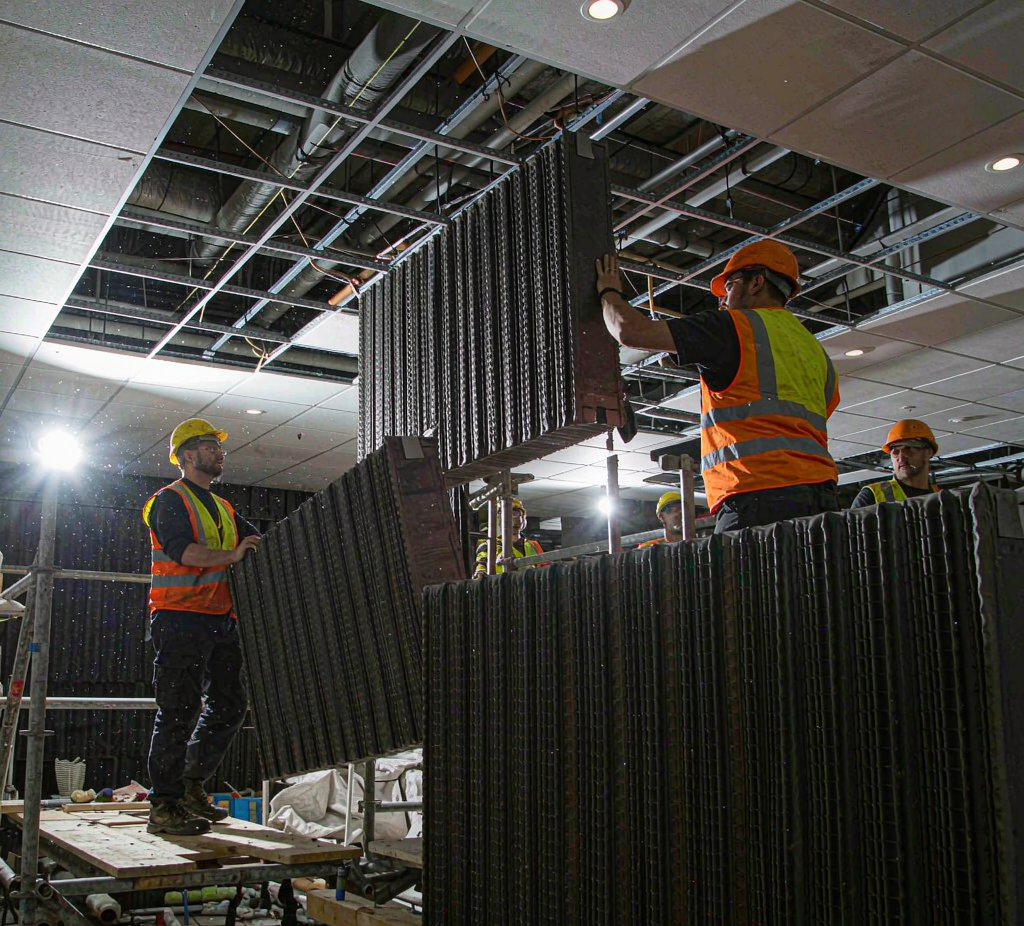
The expanded portfolio is already attracting interest from several industry segments. Construction firms working on net-zero energy buildings are testing the organic platform for thermal mass applications in wall panels and ceiling systems. Cold storage operators are evaluating the inorganic platform for backup cooling systems that reduce dependence on grid electricity during peak demand. Automotive engineers have approached the company about high-temperature PCMs for waste heat recovery in hybrid powertrains.
Perhaps most telling is the reaction from Glacier Coolant's existing secondary refrigerant customers. Many of the companies that have used the company's LM-series coolant formulations for industrial cooling over the past decade are now asking about pairing those systems with phase change thermal storage. It's a natural evolution: if you're already running a coolant loop for process temperature control, adding a PCM heat exchanger to store surplus cooling capacity requires minimal infrastructure modification.
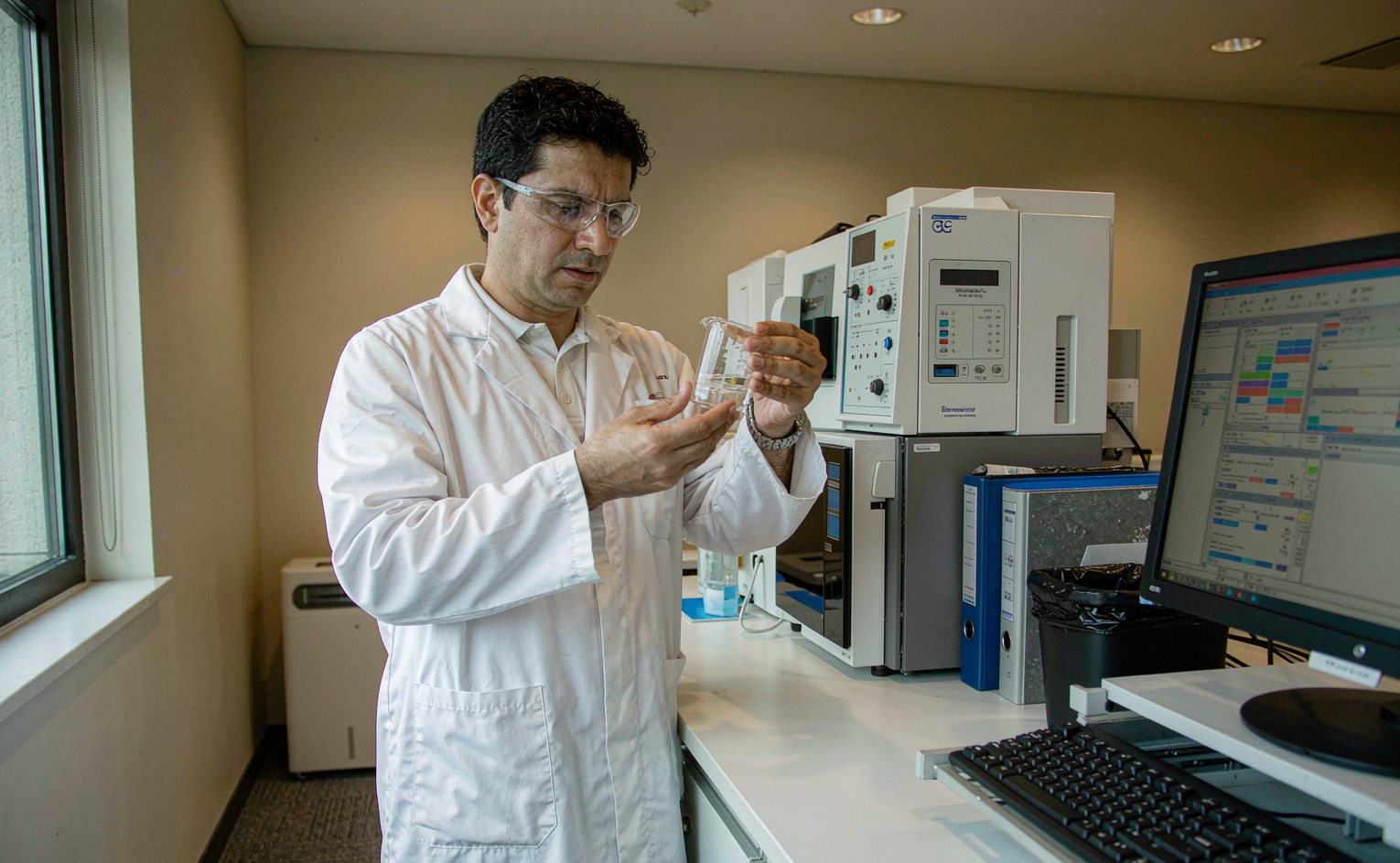

The company operates a dedicated testing facility with seven instrument systems including gas chromatography, electrochemical corrosion measurement, thermal cycling rigs, and low-temperature viscosity measurement equipment. This in-house capability supports not only its own product development but also custom formulation work for customers with specific temperature or performance requirements. Beyond standard product offerings, Glacier Coolant's engineering team provides thermal modeling and container layout optimization as part of every engagement, helping customers determine exactly which PCM formulation, quantity, and physical configuration will deliver the fastest return on investment.
For the thermal storage industry, Glacier Coolant's announcement matters because it represents a bridge between two previously disconnected domains. The PCM market has been populated largely by specialty chemical companies with limited experience in industrial cooling system integration. The secondary refrigerant market, meanwhile, has been dominated by companies focused on fluid chemistry rather than solid-state thermal storage. By operating in both worlds, Glacier Coolant brings a holistic perspective that's increasingly valuable as customers look to integrate thermal storage into their broader temperature control infrastructure.
Looking ahead, the company says it will continue expanding its high-temperature offerings above 115 degrees Celsius to serve concentrated solar power and industrial heat storage applications. It's also exploring composite formulations that blend PCMs with high-conductivity fillers like graphite to further improve heat transfer rates in specific use cases. The message to customers is clear: if you have a temperature that needs storing — too cold to waste, too valuable to let go — Glacier Coolant likely has a material that fits.