
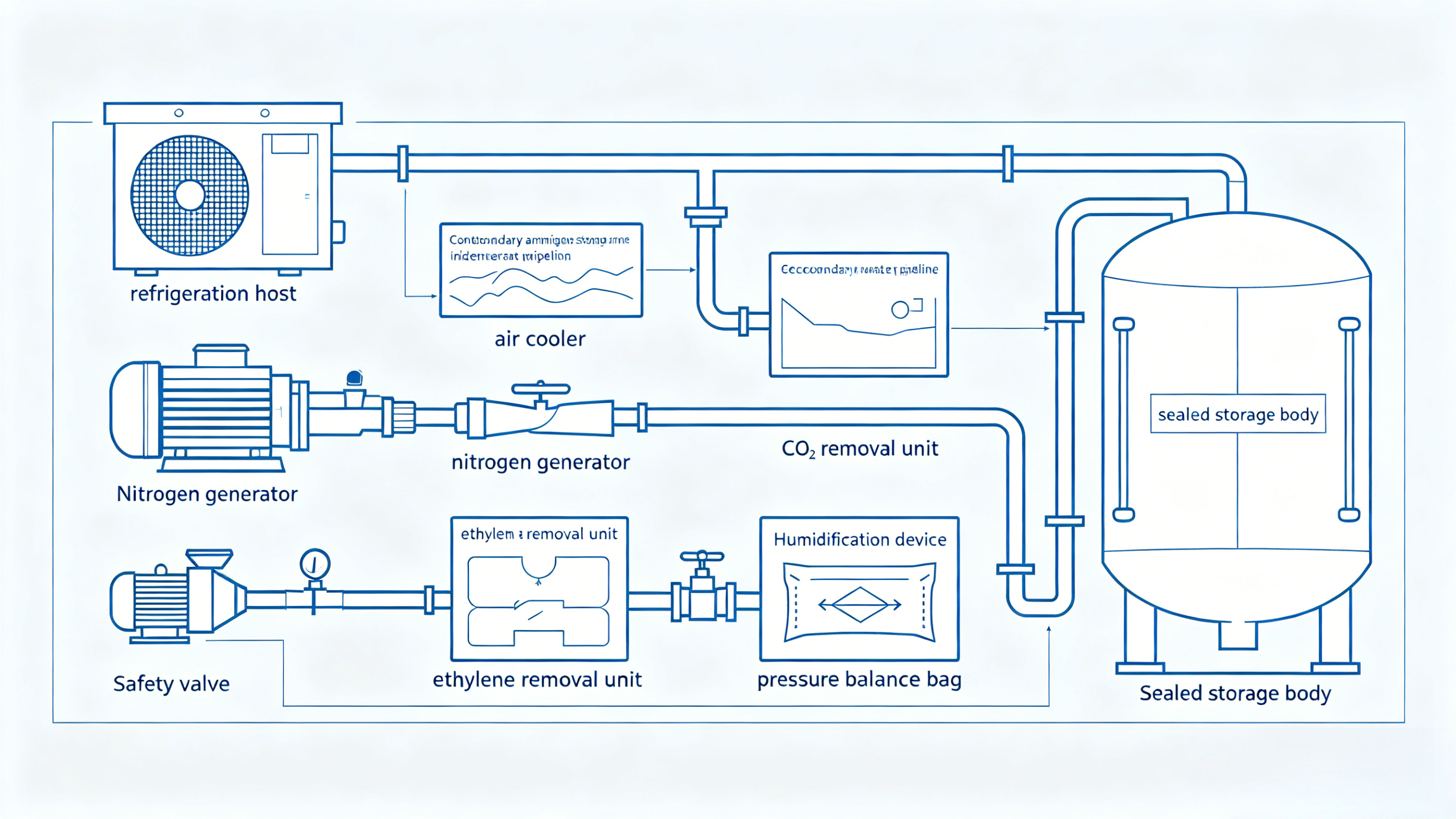
Controlled Atmosphere (CA) storage is one of the most advanced technologies for preserving fresh produce. By combining low‑temperature control with precise adjustment of the storage atmosphere, CA rooms can significantly extend the shelf life of fruits and vegetables while maintaining quality and reducing post‑harvest losses.
At the heart of these systems are two interdependent components: atmosphere management and temperature management. And within the temperature side, heat transfer fluids (secondary coolants) play a critical role — especially in indirect cooling configurations.
Glacier Coolant examines how CA storage works and why heat transfer fluids are becoming the preferred choice for high‑performance systems.
Atmosphere Management: Creating the Right Breathing Environment
Fresh produce continues to "breathe" after harvest — consuming oxygen and releasing carbon dioxide and ethylene. To slow this natural ripening process, CA rooms actively modify the gas composition.
Key atmosphere control equipment includes:
| Equipment | Function |
|---|---|
| Nitrogen generator | Lowers oxygen levels (typically to ~5%) to reduce respiration and delay aging |
| CO₂ removal system | Prevents carbon dioxide toxicity (excess CO₂ damages produce) |
| Ethylene scrubber | Removes the ripening hormone ethylene, especially important for high‑respiration fruits |
| Humidifier | Maintains optimal humidity to prevent dehydration |
| Gas analyzer | Continuously monitors O₂, CO₂, and ethylene levels |
| Pressure balance bag & safety valve | Compensates for pressure changes caused by temperature fluctuations |
These systems work together to create a stable, low‑respiration environment that keeps produce fresh for weeks or even months beyond normal refrigerated storage.
Temperature Management: The Role of Refrigeration
CA storage requires precise, stable temperatures — typically just above freezing for most fruits and vegetables. Temperature control is achieved through:
Refrigeration unit (compressor, condenser)
Circulation pump
Air cooler (evaporator fan coil)
Heat transfer fluid (secondary coolant)
Temperature control system
Direct vs. Indirect Cooling
Two main refrigeration approaches exist:
| Approach | How It Works | Pros | Cons |
|---|---|---|---|
| Direct expansion (DX) | Refrigerant evaporates directly in the air cooler | Simpler, lower initial cost | Large temperature swings, low humidity |
| Indirect (secondary coolant) | Heat transfer fluid chilled by a remote chiller circulates to air coolers | Small temperature differential, stable high humidity, better produce quality | Higher upfront complexity |
For premium produce preservation, indirect cooling using a heat transfer fluid is generally superior. The smaller temperature difference between the cooling medium and the room air allows humidity to remain high — typically 90–95% — which reduces moisture loss from fruits and vegetables. The result is longer storage life, better appearance, and less shrinkage.
Why CA Storage Requires Tight Sealing
CA rooms must be highly airtight to maintain modified gas composition. Typical specifications include:
Pressure test standard: Initial pressure ≥196 Pa
Half‑pressure decay time: ≥20 minutes
Final pressure after test: ≥78 Pa
To protect the structure from pressure changes caused by temperature fluctuations (which can stress walls and seals), CA rooms are equipped with pressure balance bags and safety valves.
Market Outlook: Growth Ahead for Indirect CA Systems
Currently, CA storage accounts for only 5–7% of high‑temperature cold storage capacity in China. However, as consumer demand for high‑quality, year‑round produce grows, and as more specialty products require defined storage conditions, the market for CA systems is expected to expand significantly.
Indirect cooling using heat transfer fluids is particularly well positioned for this growth, offering:
Better temperature stability – ideal for sensitive products
Higher humidity – reduces weight loss and wilting
Lower risk of refrigerant leakage – refrigerant stays in the machine room
Flexibility – same chiller can serve multiple rooms with different temperature setpoints
Glacier Coolant: Focused on Premium CA Systems
With deep expertise in heat transfer fluids for indirect cooling, Glacier Coolant provides reliable, low‑corrosion, and thermally efficient coolants for controlled atmosphere storage.
Formulated for long service life in closed systems
Compatible with a wide range of metals (aluminum, copper, steel)
Non‑toxic options available for food‑contact applications
Custom temperature ranges to match specific storage requirements
As the CA storage market matures, Glacier Coolant is committed to supporting high‑quality, energy‑efficient, and produce‑friendly cooling solutions.
Better temperature control means better produce. And better produce means better business.