
As the world pushes toward carbon neutrality, solar energy is taking center stage — not just for electricity generation, but for cooling as well. Solar cooling technology captures sunlight to produce cold, offering a promising alternative to conventional air conditioning systems that rely on grid power and refrigerants with high global warming potential.
But generating cold from sunlight is only half the story. Delivering that cold efficiently to where it is needed requires a reliable medium: the heat transfer fluid (secondary coolant). Glacier Coolant explores how the marriage of solar cooling and heat transfer fluids is enabling zero‑carbon cooling in buildings and beyond.
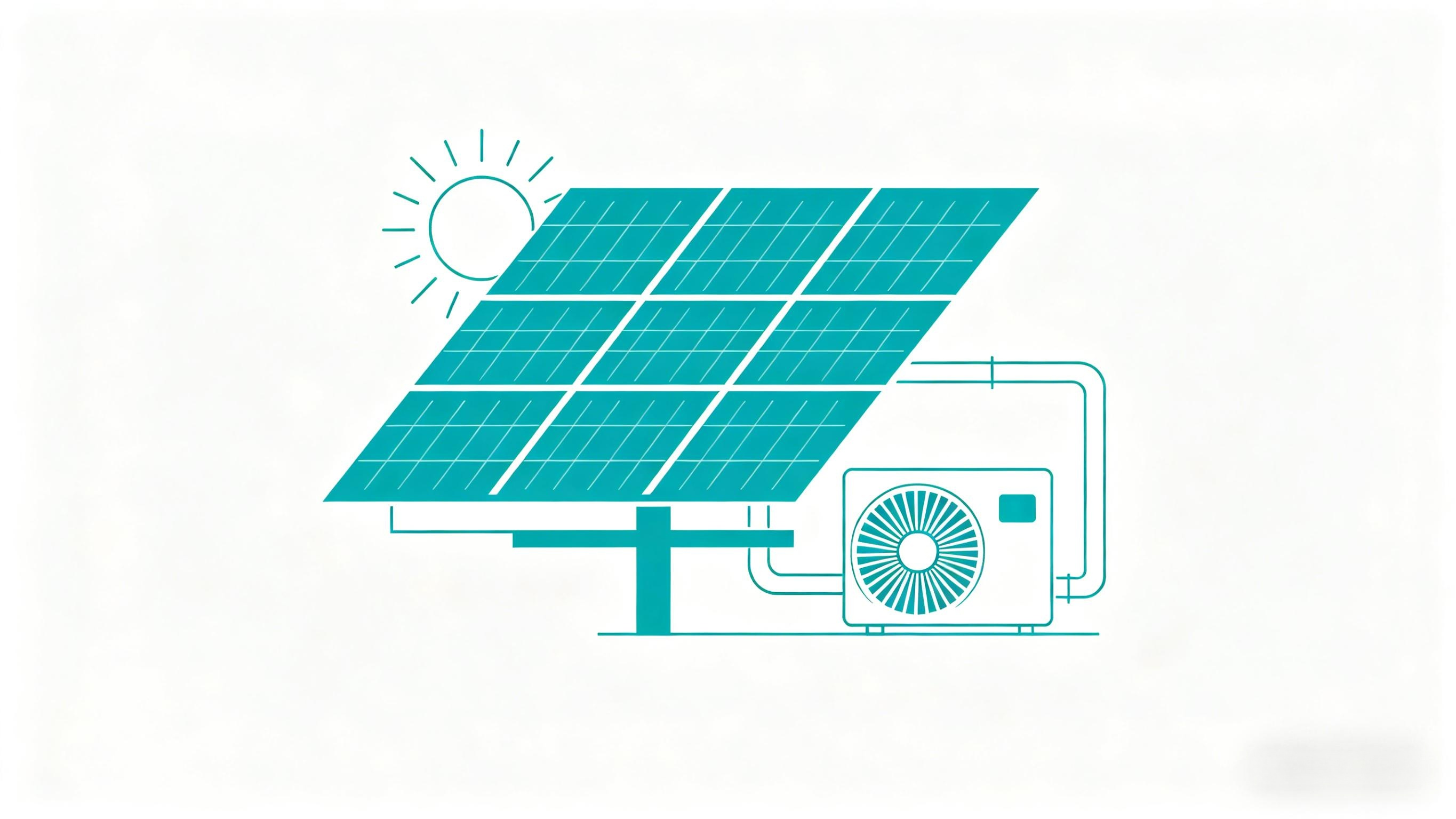
Two Main Routes to Solar Cooling
Solar cooling technologies fall into two broad categories: thermal‑driven (photothermal) and electricity‑driven (photovoltaic).
1. Photothermal Cooling (Heat‑Driven)
This approach uses solar collectors to convert sunlight into heat, which then drives a thermodynamic refrigeration cycle. Common technologies include:
Adsorption cooling
Absorption cooling
Ejection cooling
Strengths: No moving parts, quiet operation, no direct refrigerant emissions
Limitations: High initial investment, relatively large system footprint
2. Photovoltaic (PV) Cooling (Electricity‑Driven)
Here, solar panels generate electricity to power various types of refrigeration systems:
| Technology | How It Works | Status |
|---|---|---|
| Thermoelectric cooling | Uses P‑N semiconductor junctions to create a temperature difference when current flows | Commercial but low efficiency |
| PV vapor compression | Solar electricity drives a standard compressor‑based refrigeration system | Most practical and widely applicable |
| Thermoacoustic cooling | Solar‑powered acoustic waves drive heat transfer | High reliability, high cost, small scale |
| Magnetocaloric cooling | Magnetic material heats up in a magnetic field and cools when removed | Still in R&D; no compressors or traditional refrigerants |
Among these, PV‑driven vapor compression is the most mature and versatile, converting sunlight → electricity → cold energy for a wide range of applications.
The Missing Link: Heat Transfer Fluids
Generating cold from solar energy is a major achievement — but that cold must still be transported to the spaces or products that need it. This is where heat transfer fluids (secondary coolants) become essential.
In a solar cooling system, the heat transfer fluid:
Absorbs cold from the solar‑powered chiller or evaporator
Circulates through pipes to cooling terminals (fan coils, radiant ceilings, cold storage units)
Releases cold precisely where needed
Returns to be cooled again
Without an efficient heat transfer fluid, even the best solar cooling system cannot deliver its benefits effectively.
Zero‑Carbon Cooling in Action: The Rise of Net‑Zero Buildings
Some of the most advanced zero‑carbon buildings today integrate solar cooling with heat transfer fluid distribution. These systems:
Generate cooling energy entirely from sunlight
Use non‑toxic, low‑corrosion heat transfer fluids to distribute cold
Eliminate or dramatically reduce grid electricity consumption for air conditioning
Operate with minimal carbon footprint
For building owners, this means lower operating costs, energy independence, and alignment with green building certifications.
Challenges and the Path Forward
While solar cooling holds enormous promise, several challenges remain:
| Challenge | Implication |
|---|---|
| Intermittent solar radiation | Cooling output varies with weather and time of day |
| High upfront cost | Thermal systems require significant capital investment |
| System complexity | Integration of solar collectors, chillers, storage, and fluid distribution requires careful design |
| Low efficiency of some PV cooling technologies | Thermoelectric and thermoacoustic systems are not yet competitive for large‑scale use |
However, ongoing advances in phase change materials (PCMs) and thermal storage are helping to overcome the intermittency issue — storing cold energy when the sun is shining and releasing it when cooling is needed.
Glacier Coolant: Enabling Efficient Solar Cooling Delivery
With decades of experience in heat transfer fluids and phase change materials, Glacier Coolant provides the energy transport backbone for solar cooling systems.
Wide range of coolants for different temperature zones
Low‑corrosion formulations to protect system components
Compatibility with thermal storage integration
Support for zero‑carbon building designs
As solar cooling technologies mature and costs decline, the combination of sunlight‑generated cold and efficient fluid delivery will play an increasingly important role in decarbonizing the building sector.
The Bottom Line
Solar cooling is no longer a laboratory curiosity — it is a practical path to sustainable air conditioning. But to realize its full potential, the industry must pay equal attention to how that cold is transported and delivered.
Glacier Coolant is ready to help bridge that gap — one heat transfer fluid at a time.