
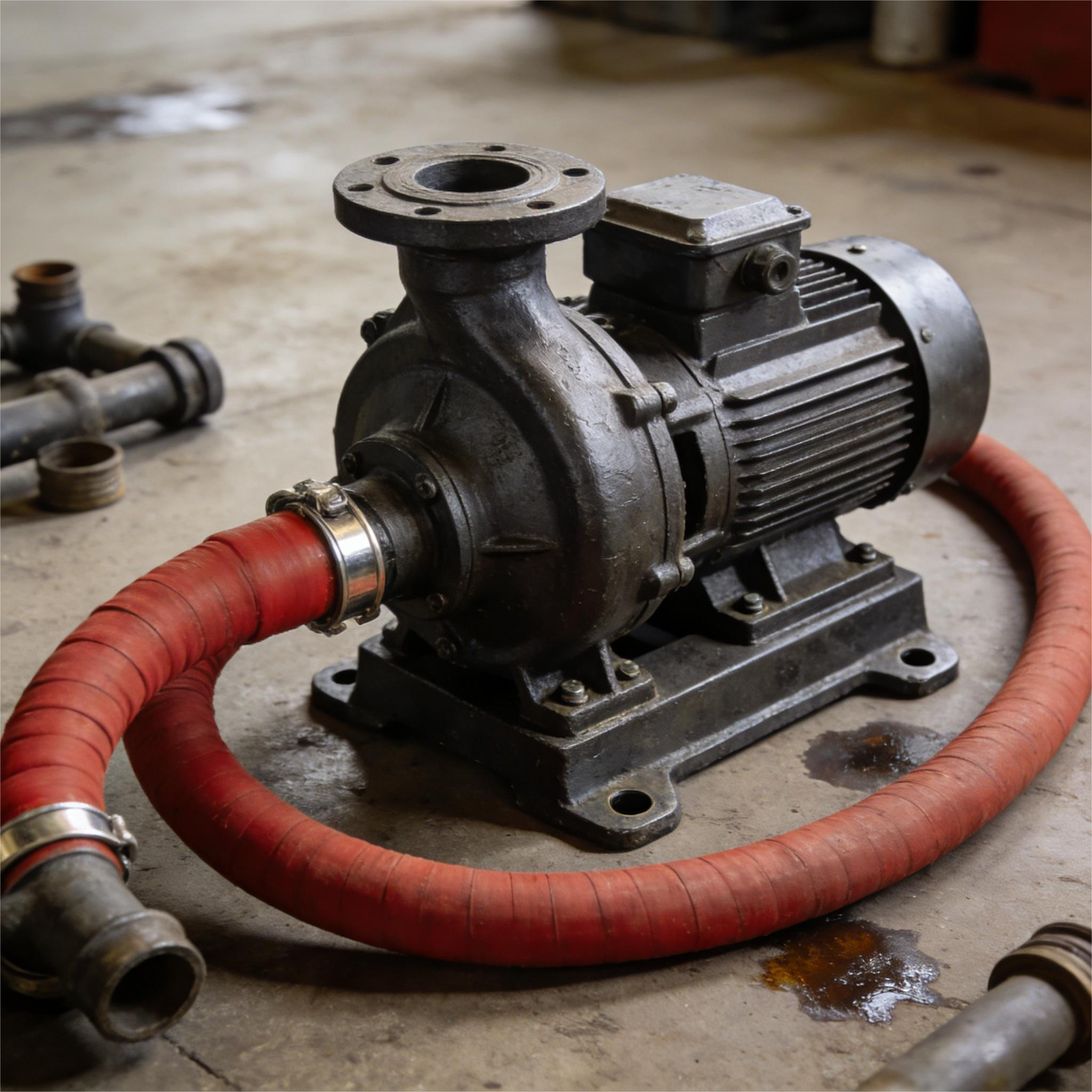
In modern industrial cooling setups that depend on a secondary coolant, the pump stands as a critical component, alongside heat exchangers. While exchangers are usually engineered by manufacturers using specialized software, the selection and sizing of the pump commonly rest with system designers. Their task involves computing the necessary flow and pressure parameters based on the coolant’s physical behavior. Because standard design tools are often calibrated for water, substantial corrections are essential when engineering for coolants such as Glacier Coolant, which possess distinctly different thermal and hydraulic characteristics. In many upgrade scenarios, field technicians rely on empirical knowledge to choose the pump, with final performance confirmed only during actual operation.
Drawing on deep expertise in industrial heat transfer fluids, Glacier Coolant provides the following recommendations to support accurate pump specification:
1. Determining Flow Rate
Begin with the known thermal load in kilowatts and the intended supply and return temperatures of the coolant. Using the specific heat value at the mean operating temperature—particularly vital in wide-temperature applications—the volumetric flow can be derived from:
Flow Rate = Thermal Load / (Temperature Difference *Specific Heat Capacity).
2. Estimating Required Head
Account for the coolant’s viscosity and density when calculating pressure losses throughout the system—including straight piping sections, fittings, valves, and installed equipment. After summing these resistances, apply a design safety margin of 5–10%. Importantly, pump curves published by manufacturers are normally based on water performance, so the computed head must be converted to its water-equivalent value before final pump selection.
3. Matching Pump Type to Application
Various pump designs are available, each characterized by a unique performance curve. For systems with multiple pumps in parallel or where flow varies significantly, units with a relatively flat curve help maintain stable operation over a range of conditions.
However, in processes with extreme operational shifts—such as rapid freezing where temperatures may span from +30°C down to -40°C—the coolant’s viscosity and density can change dramatically. A pump sized only for the most viscous low-temperature condition may deliver excessive flow and risk motor overload when operating at higher temperatures, where system resistance drops. In such dynamic environments, a pump with a steep performance curve is preferable, as its flow remains largely constant despite major head fluctuations, reducing the likelihood of motor overload. If a flat-curve pump must be used, integrating a regulating valve is advised to control discharge pressure and keep the pump operating near its intended duty point.
Glacier Coolant delivers advanced engineered fluids and tailored application expertise to optimize efficiency and reliability in industrial refrigeration and thermal management systems.